

The Soul of the Modern Sanctuary
In the quiet corners of contemporary luxury homes, where minimalism often dictates the rhythm of space, a centuries-old whisper is growing louder. It is the sound of molten sand meeting human breath—the unmistakable presence of Venetian glass. Today, as we navigate an increasingly digital and ephemeral world, the resurgence of Murano craftsmanship in high-end interiors feels less like a trend and more like a profound return to what is real. In these modern sanctuaries, Venetian glass serves as a bridge between the clinical precision of modern architecture and the visceral, tactile history of human touch.
This modern resurgence is built upon a deep Murano artisan legacy that has seen complex glassmaking techniques passed down through generations of dedicated families.
There is a specific kind of silence in a luxury home—a curated stillness where every object must earn its place. For the modern homeowner, the appeal of Venetian glass lies in its ability to break this silence without shouting. It is a material that understands light better than any other, reflecting not just the sun, but the very heritage of the artisans who shaped it. As we look at the growing presence of these pieces, we find ourselves reflecting on why an art form born in the 13th century feels more relevant today than ever before.
The Intersection of Heritage and Modernity
Contemporary luxury is no longer defined solely by price or exclusivity; it is defined by the narrative. A home filled with mass-produced items, regardless of their cost, often feels hollow. In contrast, a single piece of Venetian glass carries a weight of time. When a designer places a hand-blown Murano vase on a sleek, marble countertop, they are creating a dialogue between the past and the present. This juxtaposition is where modern luxury truly lives—in the tension between the sharp lines of today and the fluid, organic shapes of yesterday.
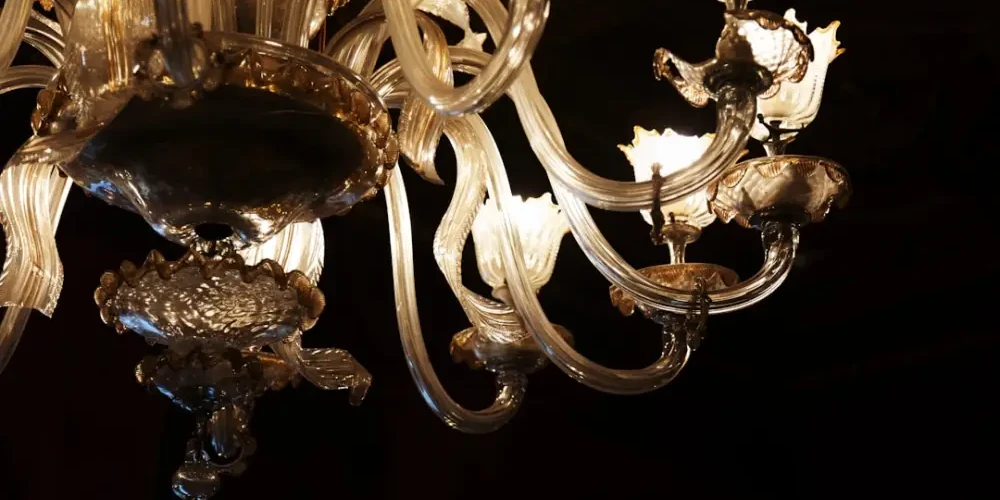
In many ways, the growing presence of glass in luxury homes is a reaction to the industrial age. We are witnessing a quiet revolution against the uniform and the generic. A Venetian glass chandelier, with its intricate glass leaves and delicate filigree, offers an intentional complexity that challenges the starkness of a modern ceiling. It invites the eye to linger, to wonder, and to appreciate the imperfections that signify a human hand was present at its birth.
Light as a Living Element
Perhaps the most compelling reason for the resurgence of Venetian glass is its relationship with light. In contemporary architecture, where floor-to-ceiling glass walls are common, light is a primary building material. Venetian glass interacts with this light in a way that synthetic materials simply cannot. It captures the shifting hues of the day, transforming a room from the cool blues of morning to the deep, golden ambers of sunset.
Maestros in Murano have spent generations mastering the art of ‘sommerso’ and ‘reticello,’ techniques that layer colors and patterns within the glass itself. When these pieces are placed in a modern luxury home, they act as kinetic sculptures. They do not just sit in space; they inhabit it, casting shadows and reflections that change as the inhabitants move through the room. This living quality brings a sense of vitality to interiors that might otherwise feel static.
Integrating the Artisan’s Touch: A Contemporary Approach
The integration of Venetian glass into the modern home has evolved. We are moving away from the cluttered displays of the past and toward a more curated, impactful placement. Designers are using glass as a focal point, a singular statement of intent. Here are a few ways this ancient art is being reimagined in contemporary spaces:
- The Sculptural Centerpiece: Using oversized glass bowls or abstract sculptures on dining tables to break the monotony of geometric furniture.
- Illumination as Art: Installing custom Murano glass lighting fixtures that serve as the primary artistic statement in a foyer or grand hall.
- Color Accents: Utilizing the vibrant, saturated pigments unique to Venetian glass—such as cobalt blue, ruby red, or emerald green—to provide a pop of color in monochromatic rooms.
- Textural Contrast: Placing smooth, translucent glass objects against rougher materials like reclaimed wood, concrete, or brushed steel.
The Subtle Statement: Beyond the Chandelier
While the chandelier remains the crown jewel of Venetian glassmaking, the contemporary luxury home finds space for more subtle expressions. We see it in the hand-mirrored surfaces of a dressing room, the delicate tumblers on a bar cart, and the intricate glass beads woven into wall coverings. These smaller elements represent a democratization of the craft within the home—a way to weave the spirit of Venice into the daily rituals of life.
There is something deeply grounding about drinking from a glass that was shaped by a master’s breath or checking one’s reflection in a mirror framed by hand-etched glass. These moments ground us in the physical world, offering a sensory experience that digital interfaces cannot replicate. They remind us of the endurance of craft and the beauty of slow, intentional creation.
A Quiet Revolution: The Value of Imperfection
Ultimately, the growing presence of Venetian glass in contemporary luxury homes reflects a deeper cultural shift. We are learning to value the ‘perfectly imperfect.’ In a world of machine-made precision, the slight asymmetry of a hand-blown vase or the tiny air bubbles trapped within a glass orb are not flaws; they are signatures of authenticity. They tell a story of a furnace in the Venetian lagoon, of a maestro’s intuition, and of a tradition that has survived fire and plague to reach our modern shores.
As we look toward the future of interior design, it is clear that Venetian glass will continue to hold its place. It is not merely a decorative choice, but a philosophical one. By bringing these pieces into our homes, we are choosing to surround ourselves with objects that have a soul. We are choosing to honor a legacy of craftsmanship that refuses to be extinguished by the passage of time. In the glass, we see ourselves—fragile yet resilient, luminous, and forever shaped by the heat of our experiences.
Related Posts
Why Venetian glass is what actually makes an eclectic room work
Discover why Venetian glass is the…
Why the act of curating glass feels like preserving a memory
Discover why collecting Venetian glass…
Why Art Deco spaces still find their soul in Venetian glass
Learn how to blend Art Deco style with…